 Hours: Wednesday 10am-3pm. Monday, Tuesday, Thursday & Friday 8am-6pm. Weekends remain at 8am-5pm. We will stay on this schedule through the end of the summer.
We are still looking for one more part-time employee, someone who knows the river well, is experienced and knowledgeable about flyfishing, and has a flexible schedule.
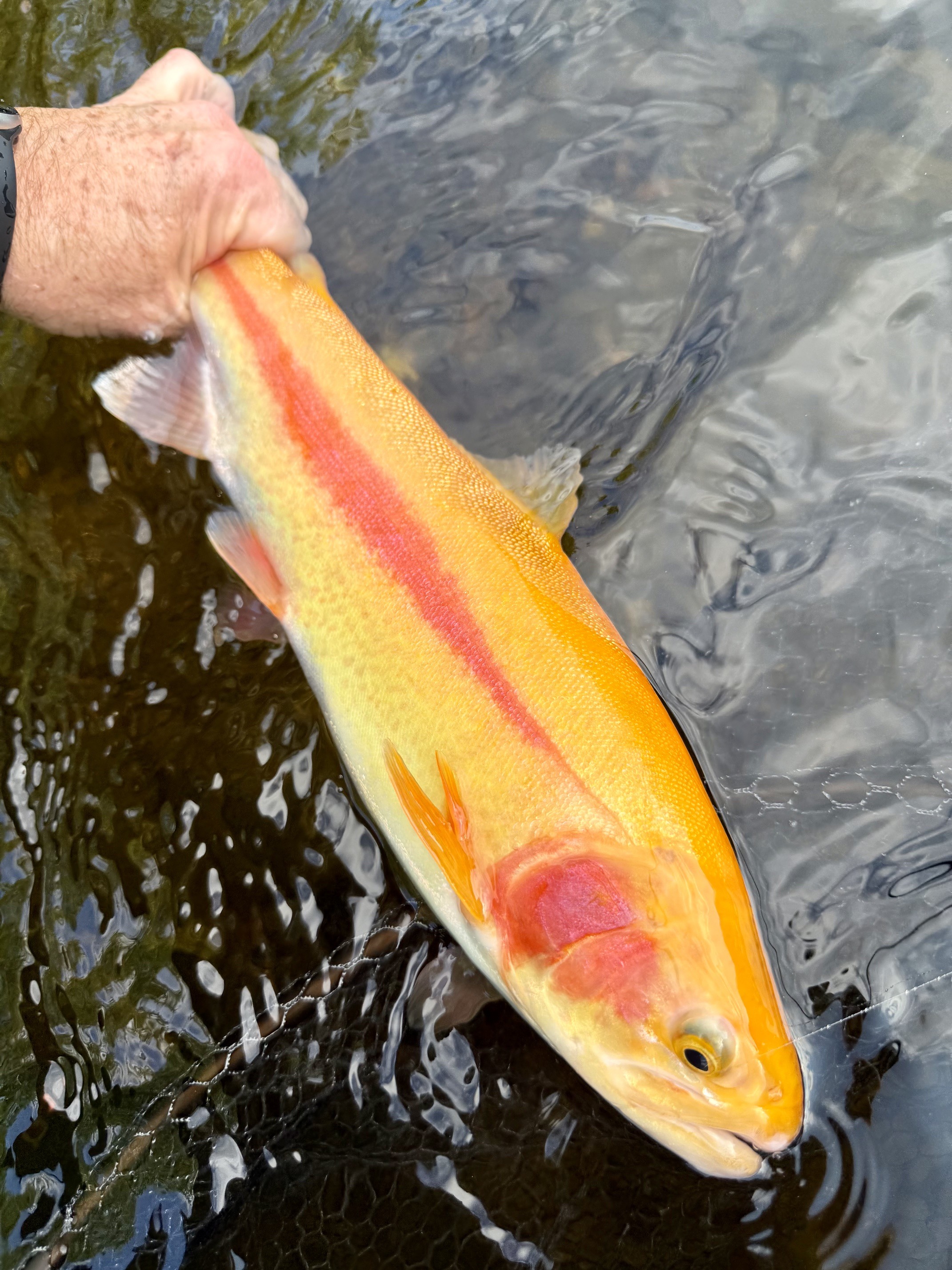
Pictured on the right is a Golden Rainbow I landed Wednesday. Fished for it for a little bit with zero reaction, so I gave up on her. But I kept fishing in the area because there are always a bunch of trout you cannot see nearby Wouldn’t you know it, I ended up catching her when I stopped targeting her. Typical lol.
We will match most advertised deals and sales from other stores local or on the internet. We want your business, and as your friends and local fly shop please come to us first if we can help. Our business only survives because of your support.
We’ve taken in 4 different book collections over the past few weeks, we literally have so many used books there is not room on our bookshelves! There are some excellent titles in the recent batches. FYI we also have quite a few autographed books.
We are now a Guideline dealer, They are a Scandinavian company that makes some great rods & reels and more. Zach & Derrrick are both BIG fans of their products. We have Euro, dry fly, and streamers rods from them. We also have Guideline Euro leader butt material in 3x to 5x for making micro leaders (great stuff and it’s inexpensive), plus a cool mini chest pack that you can attach 5 different ways.
RIVER REPORT:
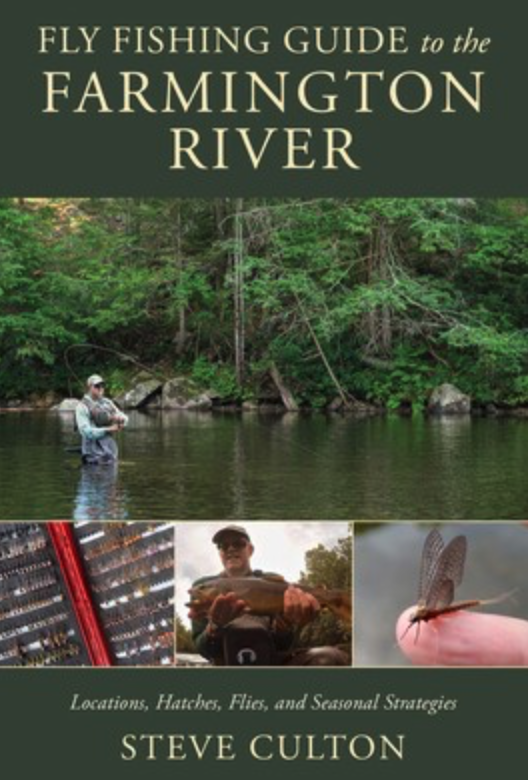 We literally just received 100 copies of Steve Culton's brand new book, "Fly Fishing the Farmington River", and it looks fantastic. Detailed info on the river, covering it from the dam in Riverton down to Tariffville Gorge. Seasons, hatches, locations, techniques, suggested fly patterns, plus detailed info from guides & river regulars. Plenty of great pictures too. Steve will be doing a book signing on August 22nd, 11am to 2pm at UpCountry. Bring a copy or buy one on that day.
The Farmington River water height gauges are finally working again on our website. USGS changed the way they provided the information a few months back and nuked our page. Thanks to a web developer we now have have updated water height, cfs, temperature, wind, and weather available to anyone traveling to the river again. See it from the Local Conditions page on the menu.
Had an interesting day Wednesday. Fished with my buddy Will. In the first spot we fished together, he fished a run that was very slow last week, but he crushed them this time on Isonychia nymphs. I fished downstream in the next deep pool and did ok, but not as well as last week. I managed a couple of bigger fish, but the biggest one of all buried me under a rock and cut my tippet. After lunch I found an unoccupied run, started slow, but once I cracked the code it was lights out. Fishing improvedbecause sun moved leaving the entire run in the shade. Ended up being a great day with lots of fish including all three regular trout species (brown, brook, rainbow), plus a golden rainbow, and some salmon parr. The only thing missing was a sucker lol.
The state did a small flow cut of about 20cfs at the dam Wednesday morning, which came as a surprise given that we’ve had a good amount of rain in July. We are at 3.5” for the month, which puts us slightly ahead for the month. They are being conservative because they want to maintain a bank of cold water to get us through August & September. The water coming out of the dam was reading 46.5 degrees this morning at the Route 20 bridge (River Self Storage/Hitchcock), it peaked yesterday at 53 degrees. The HOBO unit in New Hartford behind UpCountry is reading 59 degrees this morning, it peaked yesterday at 65.6 degrees. After cooler nights you can easily fish in the mornings down in New Hartford and even Canton, but you may need to move upriver at least a few miles as you get toward lunchtime and into the afternoon. Ideally try to stay in water below 65 for the best fishing. Make sure you have a thermometer, and use it!
Getting good to excellent dry fly reports, especially from those fishing in the evenings, so don’t leave too early! Later in the day look for Isonychia #10-12, small Blue Winged Olives #20-24, Rusty Spinners in the same sizes, Cahills/Summer Steno’s #12-16, Attenuata #18-20, and egg-laying Caddis #18-22 (tan, black). Sulfurs are basically done in the Permanent TMA/C&R, we continue to see some hatching in Riverton. Morning bugs include Summer/Winter Caddis #18-24, Needhami Duns #22-26, Needhami Spinners #22-26, and Tan Caddis #18. Ants & Beetles are good dries to fish between late morning and early evening when there aren’t too many bugs hatching. Dry/Dropper combinations are working well for many anglers. Try combining an Isonychia Comparadun and a tiny nymph like #18-20 Baetis or a Zebra Midge to catch trout in fast water
46 degree water is coming out of the dam, which is fantastic for the 4th week of July. It keeps the river at trout-friendly water temps for a good ways downriver, but if you go far enough below the dam you will eventually run into water temps that are too high to ethically trout fish (over 68 degrees), especially in the afternoons/evenings on hotter sunny days. Sunshine is the #1 driver of water temp increases, followed closely by hot air temps. Mornings after a cool night allow you to fish further downriver, then work your way upstream to stay in cool water as the day progresses and water temps increase. Use your thermometer to guide you on how far up or downriver to fish. Riverton just above the Still River has been ranging from about 46 to 53.5 degrees. 65-68 degrees should be used as a cutoff to move upriver and find cooler water. A good strategy is to start downstream, and work your way upstream as the day progresses, and this will keep you in water under 65 degrees all day long, which will give you the best fishing and minimize stress on the trout.
Fishing is always more technical in July due to lower flows and months of fishing pressure “educating” the trout, but it can be very good if you know what you are doing. Be stealthy, wear drab clothing, and use 12' or longer leaders with long/light 3-6' plus tippets in the 6x-7x range. July is prime dry fly time, but it is also good for nymphing, streamers can be good at first & last night, and this is a great time of year to go throw bushy Mice after dark. Lower water like we currently have, creates more dry fly fishing as it makes it more efficient for trout to feed on the surface due to slower & shallower flows.
This time of year when you are nymphing, look for fast water, and if it’s in the shade even better. Small nymphs #18-24 can be the difference between a slow day and a great one. 6X tippet helps, but 5x is typically okay if you don’t want to go light. Thinner tippet sinks lightweight flies better, and the greater flexibility lets you flies drift more naturally. Don’t sleep on smaller jig streamers in olive or tan.
HATCHES
Dries:
-Isonychia #10-12: Fast water bug, usually about 4pm to dark. Can also be on the water in the late mornings/early afternoons sometimes
-Sulfur #18 (Dorothea): Still hatching from about Campground all the way up to the dam in Riverton. Typically and evening bug, but we sometimes will also see them hatch around mid afternoon, especially as you get closer to the dam in colder water.
-Attenuatta #18-20: evenings, often confused with Sulfurs but they are slightly smaller and more of a bright greenish-yellow almost chartreuse color.
-Assorted Caddis (tan, olive/green #16-18, black, gray #18-22)
-Beetles & Ants #12-20: great option from late morning to early evenings, especially when bugs are not hatching
-Blue Winged Olives/BWO’s #18-24: afternoon hatch on cloudy days, also on the water in the last hour of daylight in flat pool water. Don’t sleep on #18-22 rusty spinners at dusk.
-Needhami #22-26: mornings, spinners & duns
-Light Cahill/Summer Steno #12-16: evenings
-Summer/Winter Caddis #18-24: hatch is typically early to mid morning. Trout focus on the pupa first, and then as the morning progresses they normally switch to the winged adults when they return to egg-lay. Try both twitching & dead-drifting your fly, trout often key on movement with this bug.
-Midges #20-28: 365 days a year
Nymphs:
-Caddis Pupa #14-18 (tan, olive/green)
-Caddis Larva (olive to green) #14-16: tons of these in the river, good all year
-Pheasant Tails/Frenchies #12-22: imitates a wide range of Mayflies including Sulfurs, Vitreus, Baetis/Blue Winged Olives, Isonychia, small Stoneflies, Hendricksons, and more
-Isonychia Nymph #10-12: dead-drift, swing, twitch, and even strip them in. They are great swimmers, and some days trout prefer different presentations- you won't know until you experiment.
-Baetis/BWO Nymphs #16-22
-”Junk Flies” (Eggs, Mops, Squirmy/San Juan Worms, Green Weenies): Often work when standard nymphs fail, especially when there aren’t many hatches.
-Stonefly Nymphs #8-10: golden/yellow, brown, black, Stoneflies are a mouthful that can be hard for trout to pass up, and there are a surprising amount of them in the river. Good choice when flows are up. Some days when trout won’t move for a small nymph, it takes a bigger bite of food to get an eat. Often catches larger than average fish. Best in early morning during summer
-Midges #18-22 (black, olive, red): Zebra Midge, Flash Midge, Red Iris Midge, etc.
Streamers
-Woolly Bugger #4-12: assorted colors, try also Don's Peach Bugger
-Zonker #4-6: a classic fish catcher! In white, natural
-BMAR Yellow Matuka #6: deadly fly! Also standard Matuka in olive, brown
If you like our fishing report, please consider buying your gear from us. We generally ship the same day, for free anywhere in the country on all but the smallest orders. Our shop can only exist with your patronage.
UpCountry Sportfishing is always looking for good used fly fishing gear for cash and trade. This is how we get those great items we list on our website and you see on our racks. We buy fly rods, reels, quality classic bamboo, and fly tying equipment etc. Bring in your old items and we can help turn them into something new. We pay more for trade ins than anywhere else. Call ahead for an appointment.
2026 Connecticut fishing licenses are available in store at our front counter.
For more fish photos and river news please visit our Facebook Page here.